

Your engine arrives first due to a working two-story residential structure fire. Smoke is pushing from the eaves, and flames are visible through first-floor windows. Command gives the order: pull lines and get water on the fire.
Your crew stretches a couple hundred feet of hose, flaking it out and checking for kinks as you advance toward the house. You radio the pump operator for water, but when you open the nozzle, the stream is disappointing: weak, short, and nowhere near what you need to make a push on the fire.
You call back to the pump operator and ask for more. The pump is bumped up, GPM increases, and the line finally firms up. Now you’ve got a solid stream, and you can go to work.
You did everything right on the fireground. But there was one critical factor your pump operator didn’t account for at first: friction loss.
What is friction loss, why does it happen, and how can you manage it before it costs you time and fire control? Let’s talk about it.
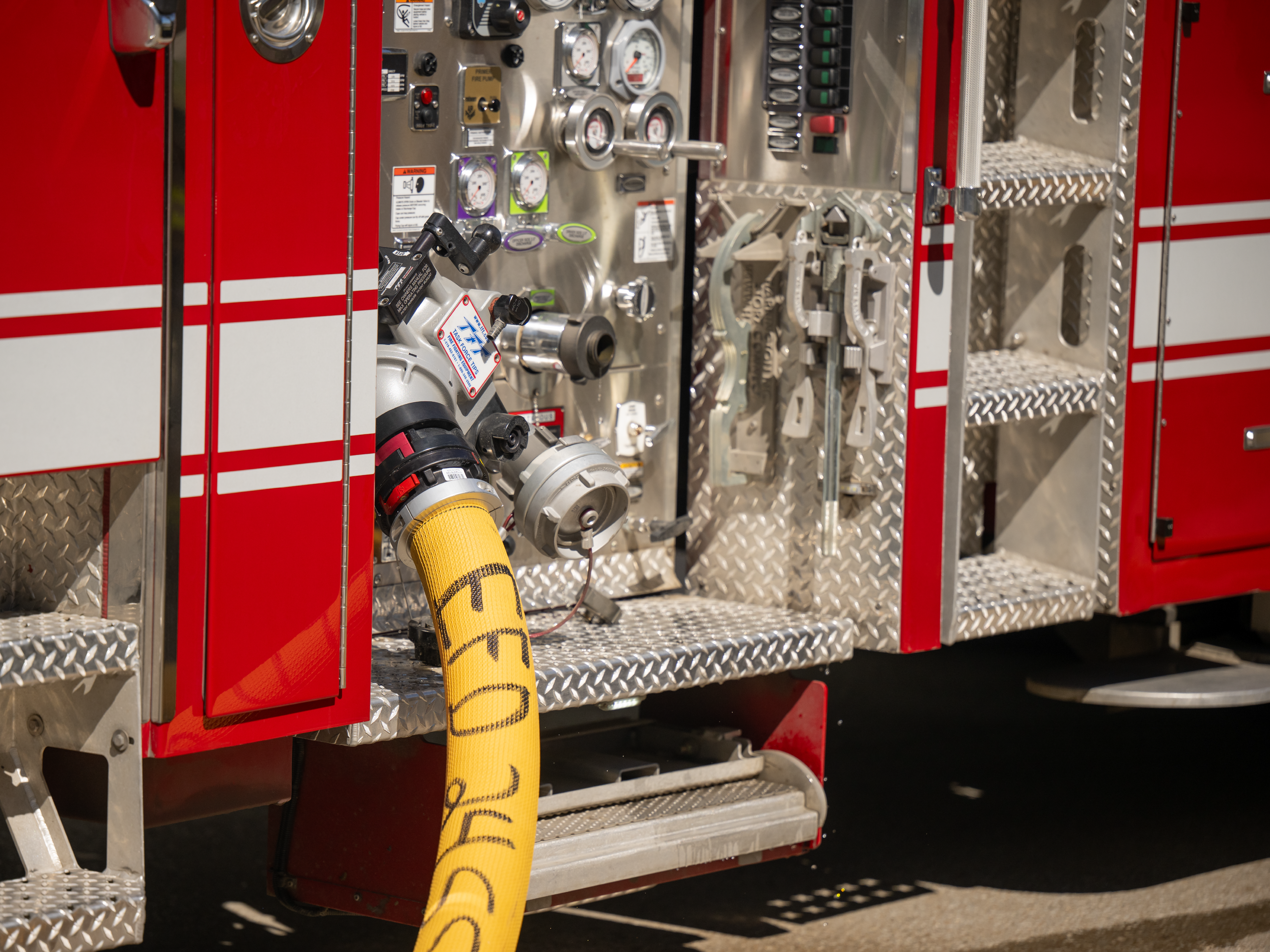
What is Friction Loss (and What Affects it)?
Friction loss is the reduction in water pressure as water moves through a hose. It happens because of resistance between the water and the hose’s inner lining, as well as added resistance from couplings, fittings, appliances, and turbulence along the way.
A simple rule of thumb: friction loss increases as GPM increases and hose diameter decreases. Beyond that, several factors directly affect how much pressure you lose:
- Hose diameter: Larger-diameter hose creates less friction, while smaller-diameter hose increases resistance and pressure loss.
- Hose construction: Hoses that kink easily or are built with less durable materials or internal imperfections tend to generate more friction loss.
- Distance: The longer the hose stretch, the greater the friction loss. Pressure drops the farther water has to travel.
- Turbulence: Every coupling, appliance, bend, or change in direction creates turbulence, and each one adds to pressure loss.
- Water volume: Higher flow rates (more GPM) result in greater friction loss.
- Gravity: When pumping to upper floors, such as in high-rise operations using standpipes or a fire department connection, elevation gain compounds pressure loss and must be accounted for.
It’s also important to remember that every apparatus pump has its own inherent friction loss. Knowing your pump, and factoring that loss into your calculations, is critical to delivering the pressure your crew needs.
Why Does Friction Loss Matter on the Fire Ground?
Firefighters and pump operators must stay aware of anything that can affect water flow on the fireground. Friction loss reduces water pressure, and when it isn’t recognized and compensated for, it can significantly impact your flow—and your ability to effectively extinguish the fire.
Maintaining strong, reliable water flow isn’t just about fire attack; it directly supports firefighter safety. Adequate pressure and volume give crews the protection and performance they need when conditions deteriorate.
How Can I Manage and Reduce Friction Loss?
There are several ways firefighters and pump operators can manage friction loss on the fireground:
- Know your numbers: Understand the friction loss for your hoses and your apparatus pump. There are two commonly accepted ways to calculate friction loss: the theoretical (coefficient) method and the fireground method. If you need a refresher, FireRescue1 has a very informative, helpful breakdown.
- Flow adequate GPM: While it’s true that friction loss increases as GPM increases, flowing too little water can also create problems. Insufficient volume can prevent the hose from fully expanding, leading to reduced pressure and even kinks; both of which worsen friction loss.
- Use the right amount of hose: Friction loss increases and pressure drops as hose length increases. If 100 feet will do the job, don’t stretch 200. Shorter stretches mean less pressure loss.
- Keep hose in top condition: Regularly inspect and clean your fire hose, watching for internal imperfections, wear, or damage. Well-maintained hose made from high-quality materials can significantly reduce friction loss.
Snap-tite hoses are engineered with durable, high-quality materials, designed to be kink-resistant and easy to clean—features that help minimize friction loss in real-world conditions. Curious about the friction loss of a specific Snap-tite hose? Try the Snap-tite friction loss calculator.
To learn more about our hoses and find the right fit for your department, visit the Snap-tite product page.
Final Thoughts: Let’s Recap
To keep friction loss in check on the fireground, remember:
- More GPM = more friction loss
- Smaller-diameter hose = more friction loss
- Longer hose stretches = greater pressure loss
- Elevation always costs pressure
- Smooth, kink-free hose = better water flow
*Training Tip: During hose drills, take time to intentionally change variables and observe the results in real time. Flow water at different GPMs and with varying hose lengths, then:
- Compare nozzle pressure at each flow rate
- Watch how kinks develop when volume is too low
- Adjust pump pressure and observe how it affects stream quality and reach
Hands-on training like this allows crews to see friction loss instead of just calculating it, reinforcing why proper flow, hose management, and pump adjustments matter on the fireground.