

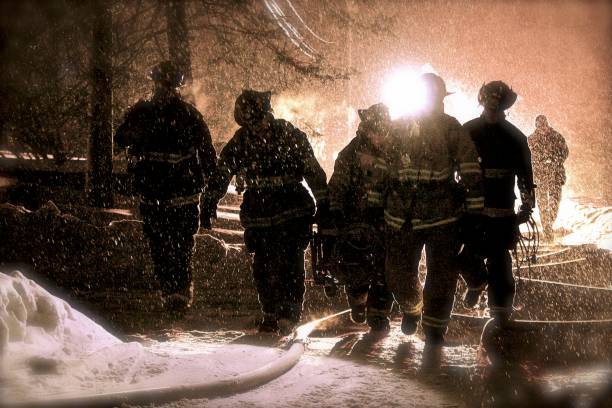
It's 2 a.m., the wind chill is well below zero, and the line you stretched twenty minutes ago has stopped doing what it’s supposed to do. It's rigid and frozen to the pavement. Your couplings fail, the ground is a skating rink, and the crew is spending energy on what to do about the hose instead of the fire.
Departments that work in cold climates have most likely lived some version of this night. Luckily, this situation is predictable, and most of it is preventable if you know your hose’s limits.
First, let’s dive into different types of hose.
Cloth vs. Rubber Hose
What most departments use fall into two categories:
- Woven-jacket hose: a synthetic nylon or polyester jacket with an inner liner. This is what people usually mean when they say "cloth."
- Rubber-covered hose: a rubber cover over the reinforcing layer, common in some attack, and industrial applications.
The line between the two easily gets blurred. Many modern jacketed hoses carry abrasion- or water-resistant coatings, and liners vary by manufacturer. So, the real question isn't cloth or rubber, it's how does the specific hose on your engine handle water, ice, and flexibility in the cold?
How Each Type Performs at Low Temperatures
| Woven jacket | Rubber-covered |
Weight | Lighter and easier to advance | Heavier and harder to deploy. More likely used in supply applications. |
Water and Ice | Jacket can absorb water, then freeze, adding weight and bonding to the ground | Generally sheds water better, so less ice builds up on the cover |
Flexibility | Can become stiff and harder to reload or roll | Can stiffen in extreme cold and can crack easier |
Other Strengths | Easy handling over long stretches | Good abrasion and anti-freezing properties |
What Actually Goes Wrong with Hose in the Cold
- More brittle and less flexible:Forcing a frozen hose to bend can crack liners or wear the jacket in ways you may not see initially.
- Coupling and Fitting Leaks: Extreme cold causes metal and synthetic fittings to contract, raising the likelihood of leaks, pressure loss, or failure at the connections.
- Added Weight: Outer woven jackets can absorb moisture and freeze solid, adding massive dead weight that makes carrying, repositioning, and advancing lines much harder for crews.
- People: Slips, falls, cold-water exposure, and wet gear are the biggest risks of all. A frozen fireground is a hazard to the crew before it's a hazard to the equipment.
Winter doesn't treat the two types equally, but neither is winterproof. The one that performs better on your rig depends on what you buy, how you lay it, and how you care for it afterward. The good news is that a few consistent habits go a long way toward keeping lines working and crews safe.
Firefighter Checklist During the Winter
Know your hose construction. Confirm whether your hose is jacketed or rubber because temperature ratings vary, so knowing your hose’s limits beforehand prevents surprises later.
Keep water flowing.Moving water is much harder to freeze than still water. Avoid leaving charged lines sitting in extreme cold for too long.
Drain and break down before lines freeze.Drain water out as soon as you can, since trapped water freezes quickly, and bending a stiff, frozen hose is how liners and jackets crack.
Inspect your equipment. Check couplings, and the full length of hose for cracks and abrasion, even if nothing looked wrong in the field.
Protect yourself and your crew. Treat footing and wet gear as seriously as the hose itself. Keep the ground treated and take a chance to warm up and dry any time you can.
Cold weather makes the job harder, but the right hose and habits keep it manageable. We have hoses that stay flexible down to -40ºF, so you can focus more on the fire instead of the equipment.
Explore Municipal Hose Library Learn More About Winter Firefighting Safety