

You don’t need much imagination to picture a cold-weather fire: pulling up to a working structure surrounded by two feet of sparkling snow. No matter how seasoned your crew is, freezing temperatures mean you’re in for a tough scene.
Your gear has to hold up, regardless of the weather. And while reliable equipment is step one, there are also simple steps you can take before you roll out to make cold-weather firefighting a little easier.
How Cold Weather Affects Fire Hose Performance
Cold and freezing temperatures can affect your hose in several ways:
- Brittle: Polymers in the hose can become rigid, losing elasticity and making them more susceptible to cracks and breaks.
- Less flexible: Low temps make hose harder to bend and maneuver. Jacketed hose can also become water-logged and freeze, adding weight and stiffness.
- More likely to leak: Extreme weather can cause your hose to contract, increasing the chance of leaks at connections and fittings.
There’s also potential impact to your water and flow:
- Hose Freezing: If a hose line is shut down and left unused, the water inside can freeze, obstructing flow and reducing the water available for fire suppression.
- Nozzle Freezing: Mist or water from your hose can freeze on the nozzle, requiring you to break the ice before use. Spray may also freeze on surrounding surfaces and equipment, creating additional hazards on the fireground.
No hose is immune to extreme conditions. Proper awareness and preparation are going to be essential to maintaining water delivery and keeping crews safe.
Cold-Weather Fire Operations: Best Practices
Winter fires demand more than instincts. They require smart positioning, careful staging, and an understanding of how freezing conditions affect every part of the operation. As the first unit on scene, you’re evaluating not just the structure, but the weather, water supply, and how incoming mutual aid will fit into the response.
Extreme cold can impact nearly every aspect of firefighting:
- Hoses and nozzles: Cold temperatures can stiffen hoses, reduce flexibility, and freeze nozzles.
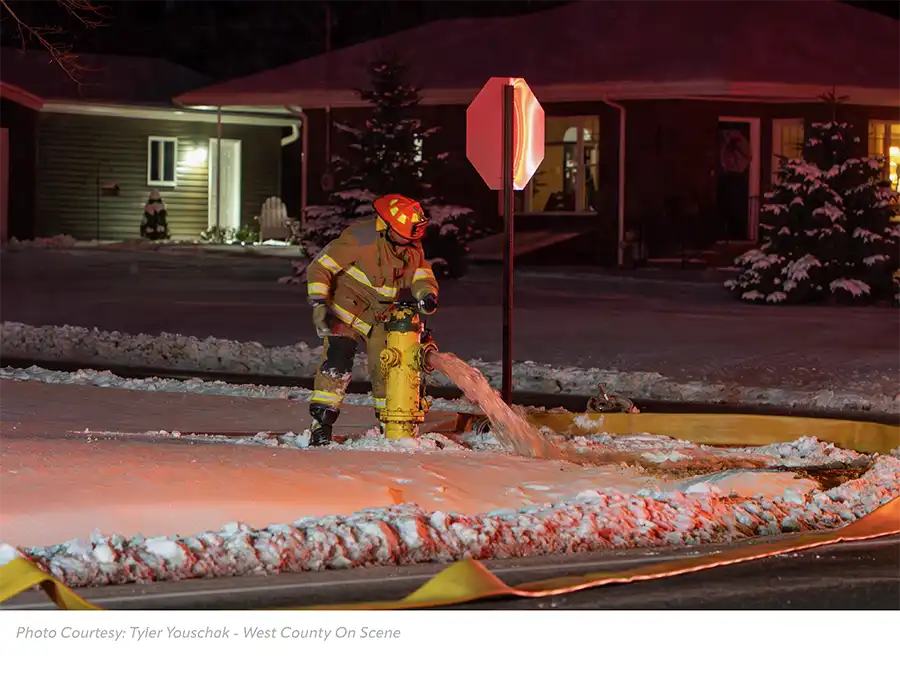
- Fire hydrants: In freezing conditions, you may need to try multiple hydrants. Couplings can freeze, and even once opened, water flow may be limited. Watch for ice buildup once a connection is established. If hydrants aren’t available, set up a port-a-pond and tanker shuttle, ensuring water is recirculated to prevent freezing.
- Fire apparatus: Keep your rig running to maintain pump operation. Set your tank to recirculate to prevent freezing, and fill it with warm water if possible.
Equipment is only part of the challenge—cold-weather safety is just as critical:
- Fireground: Water quickly turns to ice. Carry sand or salt to maintain safe footing.
- Gear and personnel: Even layered PPE can’t fully block the cold. Rotations, extra gear, and a sheltered rehab area help crews stay safe and effective.
Operational Best Practices:
- Manage water flow: Direct water away from apparatus, command posts, and rehab areas to minimize ice buildup.
- Keep pumps engaged: Recirculate water in tanks to prevent freezing.
- Crack the nozzle: If a hose is not in use during freezing temperatures, leave the nozzle slightly open to allow a small flow, preventing ice inside the hose. Be mindful of where the water may create ice hazards.
By combining careful planning, equipment awareness, and cold-weather safety practices, crews can maintain effective operations and reduce hazards on winter fire scenes.
Hose Care Tips for Cold Weather: Pre-Incident
It’s important to inspect your fire hose annually, as well as after every call. This becomes even more important in extreme cold weather.
To help keep your fire hose in top shape, you’ll want to:
- Visually inspect your hose: Inspect hoses for normal wear, such as abrasion, and ensure all couplings are free of dents or corrosion. Check that rubber gaskets are intact, replacing any that are damaged. Remove any hose showing significant damage from service.
- Test the hose: Flow water through your hose, making sure you have adequate pressure and that your nozzle is in good working order, too.
- Spray connections with a lubricating spray: Using a manufacturer approved lubricating spray on your rubber gaskets can help keep connections in good working order.
Ideally, you should inspect your hose before temperatures start to plummet, but there’s no time like the present if you haven’t done so yet.
Pro tip: A good time to inspect is on a drill night or during a monthly truck check.
Hose Care Tips for Cold Weather: Post-Incident
Once the fire is extinguished and you’ve returned to the station, make sure your hose is ready for your next call. In cold weather, it’s particularly important to drain and dry your hose to avoid cracking, breakage and deterioration.
To properly care for your hose after a cold weather call:
- Thaw your hose first: It’s likely your hose is going to be cold and stiff from the fire scene. Don’t use risky heat or thaw with force, as this can potentially damage various parts of your hose. Allow it to thaw in your fire station.
- Drain your hose completely: Whether you diligently walk the water out, run your hose over something tall or use an air compressor to blow excess water out, all water needs to be drained from your lines.
- Clean thoroughly: Despite the freezing temperatures, debris and carcinogens can still end up on your hose. Clean your hose like normal.
- Dry and store indoors: Dry your hose completely to avoid any residual moisture and store indoors before it’s put back on a rig.
Hose for All Conditions
With proper care, your hose can deliver reliable performance and a long service life, no matter the weather. Firefighters need to trust their tools, and Snap-tite hoses are built to set the industry standard.
Every Snap-tite hose is tested, certified, and engineered for both performance and extreme conditions. Running calls with Snap-tite gives you confidence that your hose will perform when it matters most, delivering water exactly where it’s needed.
Discover more about our hoses today, and see them in action by following us on social media!